Let’s start with the good news: Governor Brad Little is not raiding the state’s budget stabilization fund (also called the “rainy day” fund) to balance the budget. On top of that, at least some measure of state conformity, or matching tax cuts, to Trump’s federal tax cuts is included in his budget proposal — although this appears to be delayed for a year. The governor is now proposing about $554 million less General Fund spending than his own agencies are for Fiscal Year 2027 (FY27). This means that the FY27 General Fund budget request is essentially flat compared to FY26’s original appropriations.
Here’s the bad news: Unfortunately, the overall budget proposal still does not “meet the moment.”
Let’s examine why.
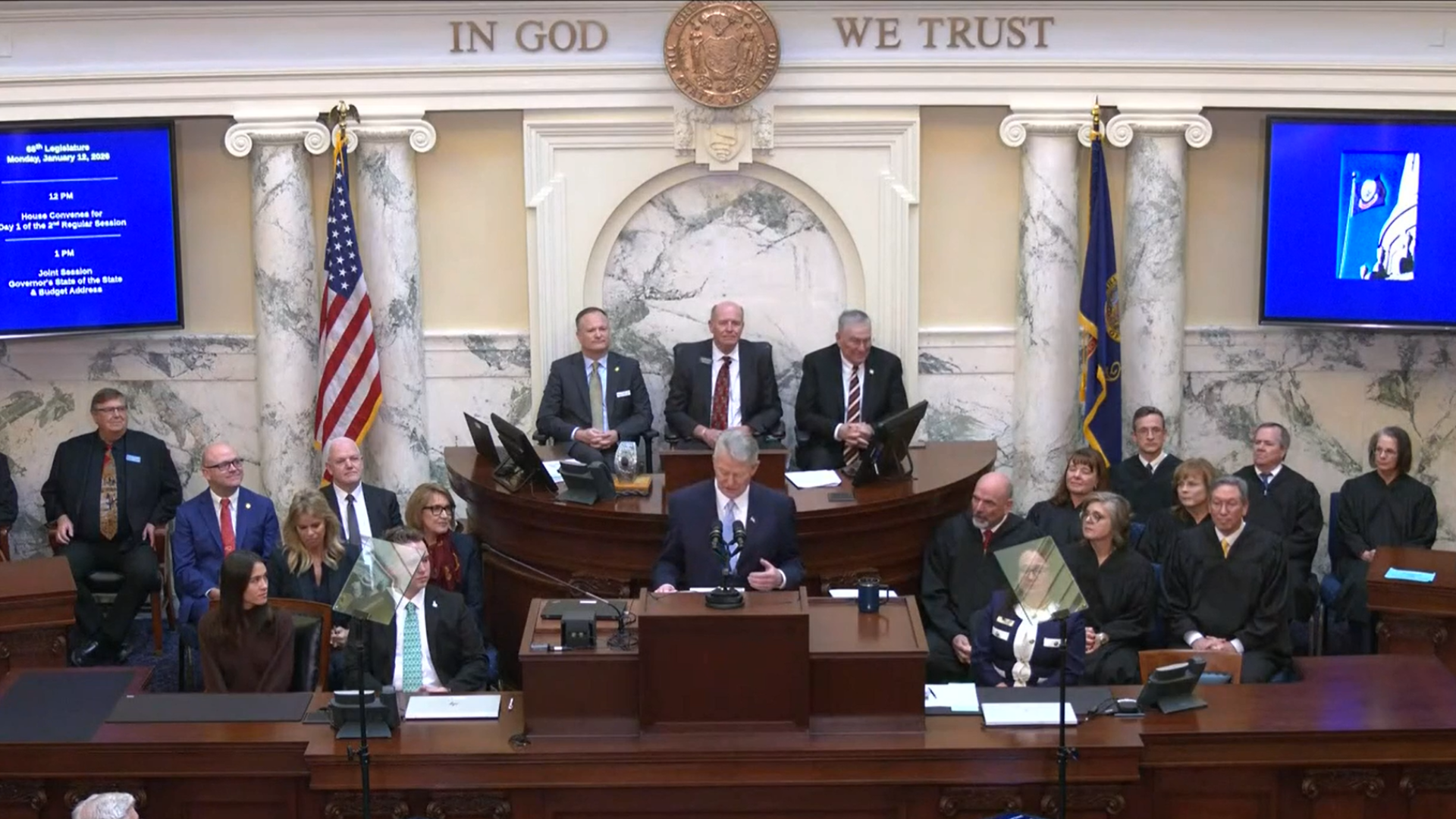
The weight of the budget shortfall does not rest entirely on the governor’s shoulders. If nothing is done, FY26 would be $77 million in the hole according to the latest agency figures, which included some reductions earlier in the year. The governor sets the stage with his “State of the State” address, where he unveils his proposal for the state budget. The governor and his executive agencies have the entire off-session period to develop the budget request with all the resources necessary to provide a thorough review. And, after increasing the total funds by about 60% over the last six years (FY20-26), this year is the year for a critical re-evaluation of all spending. Instead, we get a budget balanced for the remainder of FY26 and upcoming FY27, mostly using one-time savings.
It’s a short-term solution with no attention to long-term spending discipline.
Here are the key takeaways from the governor’s budget presentation, which emphasized just the General Fund spending and not the remaining state or federal dollars. We will have more to say on Dedicated and Federal dollars in a forthcoming article because the Department of Health Welfare budgets requests are up 8.5% or over $500 million.
- The budget proposal makes neither major structural reforms nor eliminates major programs. For example, the governor pulls back $10 million from his newly launched “In-demand Careers” Program but doesn’t rescind it. This is yet another program that uses taxpayer dollars to pay for a post-secondary education training vehicle. Elimination could save about $75 million in ongoing expenditures instead of just $10 million for one year.
- The Idaho Constitution requires a balanced budget, which means an ending balance (revenues minus expenditures) of at least $0. Recent history suggests that ending balances may have been too large, but now it seems to swing too far in the other direction — too small because there are not enough cuts. The FY26 budget’s projected ending balance of $32 million for the current fiscal year means that if the actual revenues are merely 1% short of the projected revenues of $5.5 billion, the ending balance will be negative. Meaning it won’t pass constitutional muster, and the Legislature will have to be called back into special session. Furthermore, the proposed ending balance of only $26 million for FY27 is even more tenuous. A tiny 0.5% shortfall in actual revenues relative to the forecast will put the ending balance in the red. Revenues are projected to grow by 3% from FY26 to FY27, which may seem reasonable, but why not reduce spending further in FY27 to safely clear the constitutional hurdle?
- About 99% of General Fund expenditures in FY26 are for ongoing items in the budget, rather than one-time spending, but the governor is balancing the budget with one-time cuts for the remainder of the year. Perhaps this is reasonable for this year, because we are halfway through FY26. But in FY27, the reductions are only $118 million in ongoing spending or about 2% of expenditures (slightly higher if you add the small ongoing cuts from FY26). There are two major problems for FY27: first, the ongoing portion of the budget is $103 million in the red, and second, the overall miserly ending balance of $26 million is only achieved through, pulling back $275 million from Transportation initiatives, $101 million in one-time “savings” plus the estimated carry-over from the current year of $32 million. Talk about balancing on a pin. It’s important to note that the one-time savings are not actual savings, as many of these cuts will divert interest income that would normally go to things like the Permanent Building Fund to the General Fund.
At the end of the day, the governor has applied short-term remedies, leaving the hard work of restoring fiscal discipline to the Legislature. We are optimistic that they are up to the task. Stay tuned as the Idaho Freedom Foundation will have more advice on long-term budget alternatives and true conservative spending plans later this week.