



The spectre of Obamacare continues to haunt Idaho. How so? Over the summer, Idaho Ed News ran 15 articles detailing how the Idaho School Benefit Trust Fund has burned through its entire reserves. Amazingly, the reserves were over $13 million in May 2025 and were more than exhausted, going negative ($10 million) by May 2026. The insolvency led to the Idaho Department of Insurance taking over management of the fund, with Director Dean Cameron acting as court-appointed “Rehabilitator of the Trust.”
Last fall we commented on how school health benefits costs continue to explode, but now the issue has taken on a new twist with the insolvency.
With most trust funds, the purpose of reserves is to create a cushion against a sudden increase in costs, without which premiums from district employees (including teachers) could surge upwards based on a bad year of claims. The purpose of insurance and the trust fund is to pool expenses, spread risk across a larger population, and reduce premium surges based on high claims for participants with cancer, etc.
About 100 school districts and charter schools participated in this trust fund. But interestingly so did the Idaho Education Association and the Idaho School Boards Association. Their participation leads one to believe some sort of bailout will be requested from the legislature, even if it is not explicitly called that. And it should be asked how these two private organizations were able to participate in a public education trust fund.
The immediate question beyond participation and various groups is why did the financial posture of the trust fund deteriorate so rapidly? It is a legitimate question that needs to be answered.
Part of the answer brings us back to the original point. What has this got to do with President Obama’s Affordable Care Act (ACA)? Everything, really. Let’s not forget that costs continue to go up because the ACA has the wrong incentives by requiring “10 essential benefits,” without actually controlling any of those costs.
So, costs go up, without restraint, and the conversation always shifts to who pays then. Critics rightly point out that the ACA was designed to fail into a government-run single-payer system — “Medicare For All,” as the new Democrat/Progressive mantra proclaims. The Federal Government (using Federal Fiscal Year 2025 data) spends nearly $2.2 trillion on health care outlays (Medicare, Medicaid, Veterans, other subsidies, etc.), nearly 1 out of 3 federal dollars, up from about 1 in 4 federal dollars before the ACA. The ACA was simply a cost shift, not a cost savings, and it’s one of the major drivers of the federal deficit.
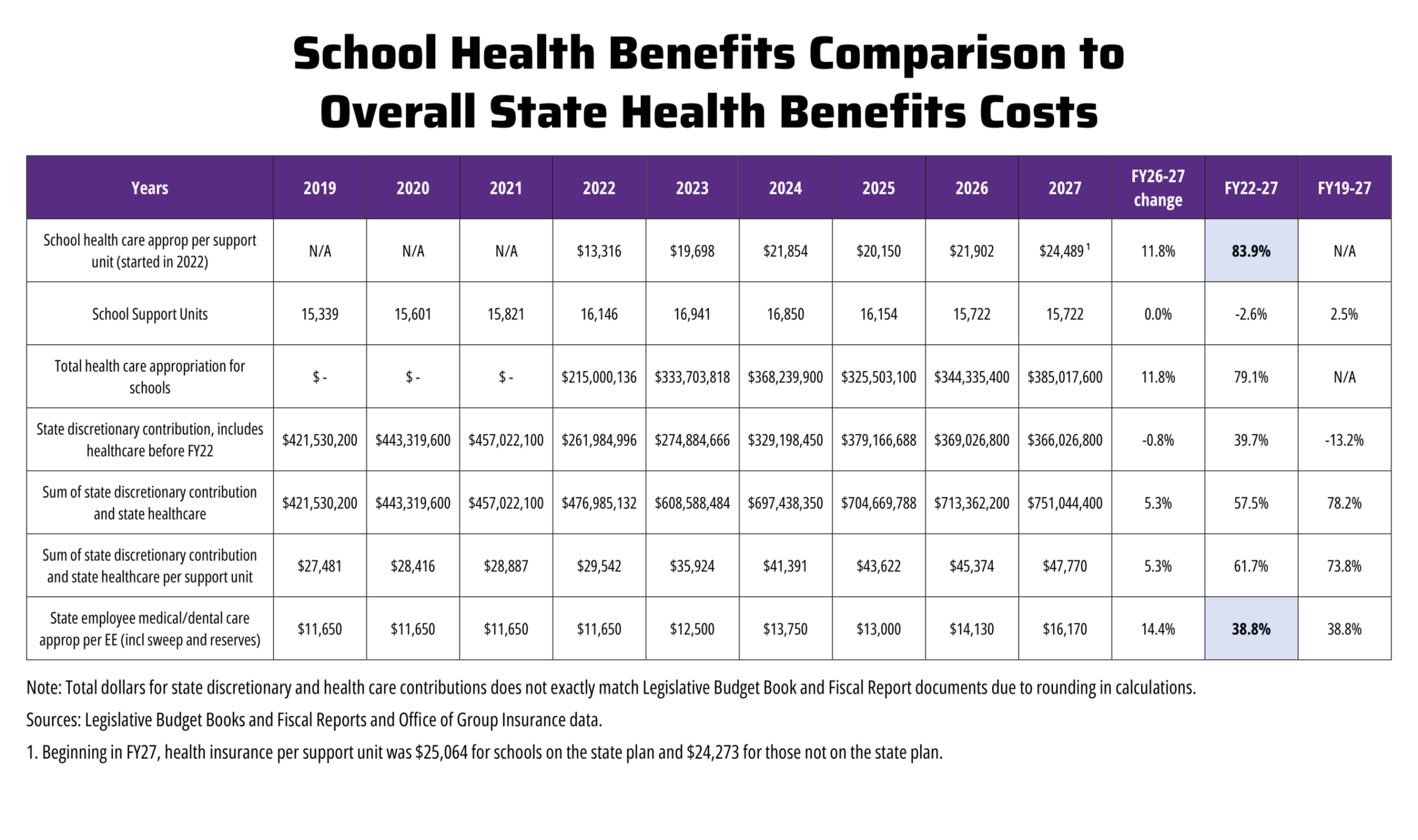
So, what does all this mean to the state of Idaho? What we will witness when the inevitable call for more funding for school district health comes — is another shift, this time to Idaho’s taxpayers. As the table below demonstrates, Idaho’s taxpayers have increased health care subsidies to districts at a rate greater than to state employees. From Fiscal Year 2022 (FY22) to FY27, the state’s contribution to district health costs per support unit (a classroom size unit) increased 83.9%, while the cost allocation per state employee increased by 38.8%. Yet apparently that won’t be enough for school districts.
(Click on the chart below to enlarge it.)
The state will be asking taxpayers to pick up even more of school district health care costs. This is not a solution to soaring health care costs — it's just another shift. A brick in the road to a government-run single-payer system. “Medicare for All” is coming to Idaho.