
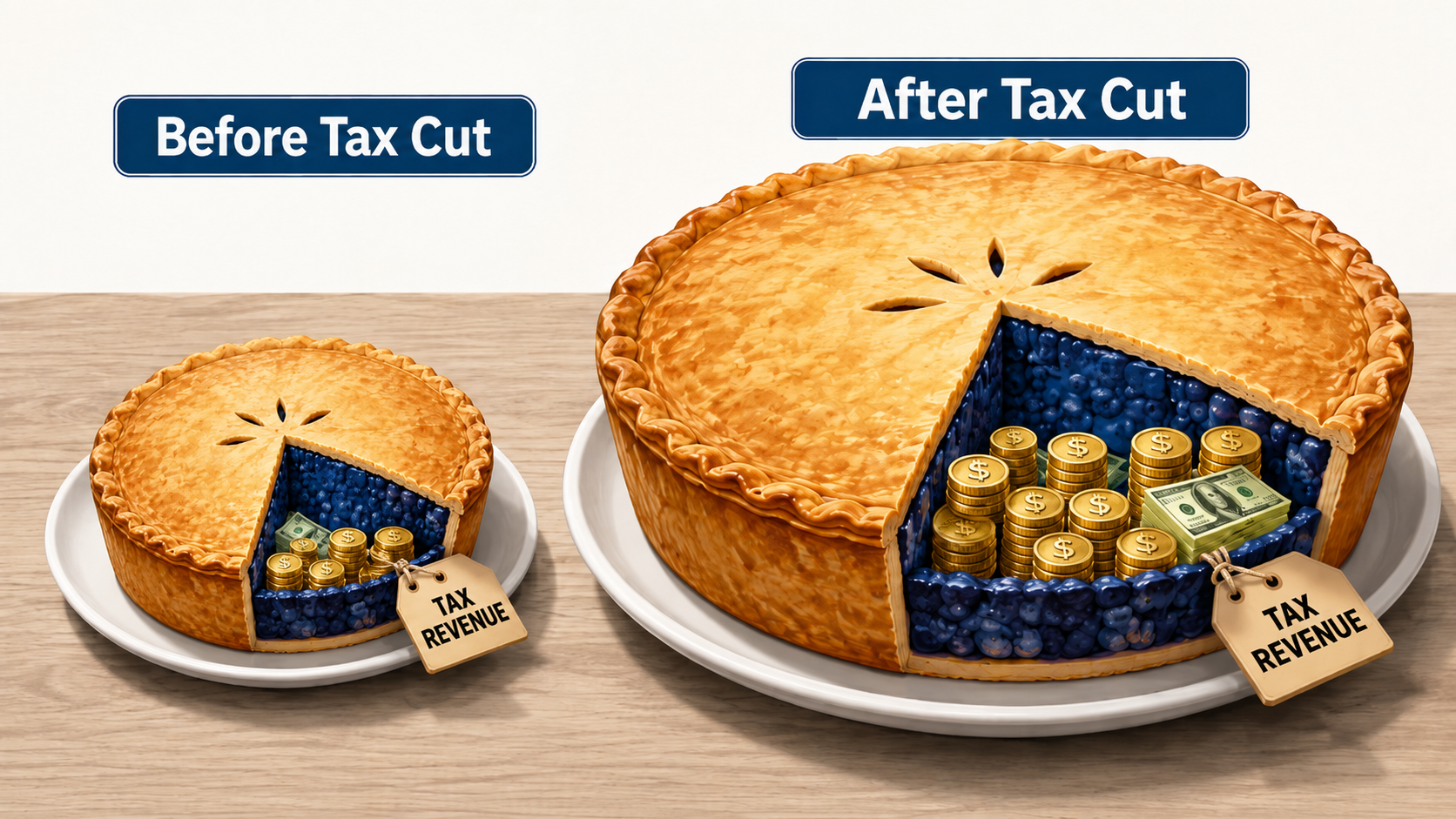


You’ve probably seen the video clips of big spenders at the Idaho legislature complaining about how recent income tax cuts have squeezed revenues to the state to the point where necessary programs are under pressure from cutbacks. Well, after the robust spending growth we have documented since the COVID spending splurge began, we certainly hope so. Scrutinizing state finances and reducing unnecessary spending should be the expectation for a state legislature that is over 80% Republican.
But the actual picture is not what you might expect. Why? Tax cuts don’t remove money from the economy. They shift it back to citizens for their productive uses. That often stimulates economic growth, which cycles revenues back to the government. Call it an economic circle of goodness. In fact the state fiscal year just ended — the state fiscal year runs from July 1 to June 30, meaning that FY26 just ended on June 30, 2026 and produced revenues exceeding both the Governor’s and the Legislature’s forecast.
Let’s look at some data.
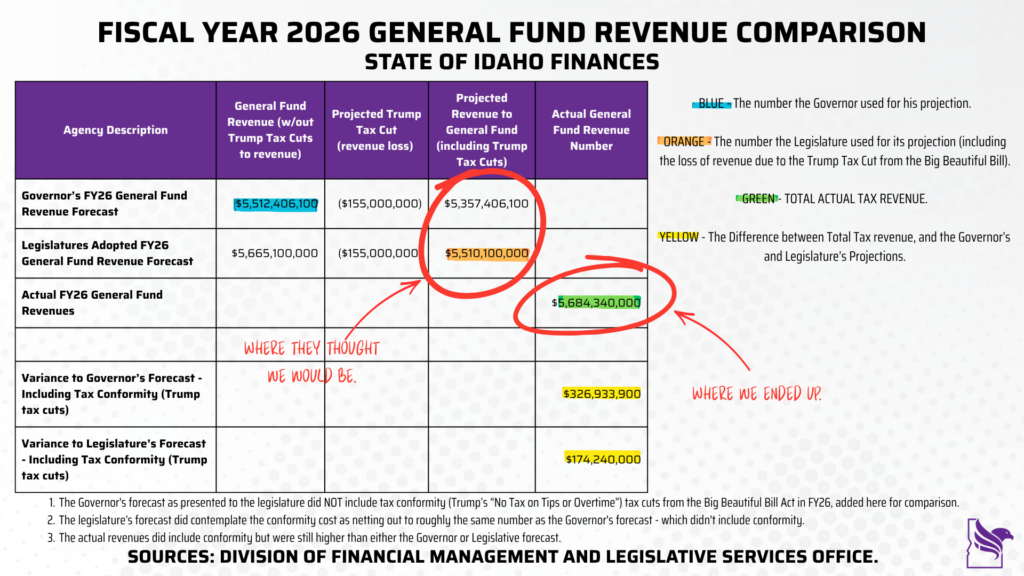
What we see is that the Governor’s team forecast $5.512 billion in revenues, and did not include the tax cuts — such as no tax on tips or overtime pay — required to conform to the Big Beautiful Bill Act for FY26 that were estimated to reduce revenues by $155 million in FY26. So when we compare the actual revenues to the Governor’s forecast, we see that they exceeded the forecast by about $327 million or 6% - when you factor in the tax cut conformity. And when comparing the actual revenues to the Legislature's forecast, which did include conformity, we see that the actual revenues were about $174 million or 3% greater than the forecast.
Ok, to recap without all of the numbers. The “government-eats-first crowd” was wrong! Idaho’s economic growth (maybe spurred by people keeping more of their earnings) led to tax collections exceeding all forecasts. The governor’s forecast, the legislature’s forecast, and the big-spenders’ claims were all significantly lower than the tax collections actually coming in. Idaho’s economic growth overpowered the doomsday predictions and the state ended up with more money — not less.
Tax cuts have dynamic effects on the economy. They attract people and businesses, which is why states like Idaho, Texas, and Florida are growing and states like New York and California are shedding people and businesses. We won’t claim that reducing tax rates guarantees higher revenues or even flat revenues; sometimes revenues do go down. That is the point of cutting taxes, especially when the government has grown faster than wages since COVID. Let’s put the people of Idaho first, which means constraining government growth and returning the excess revenues to taxpayers.